

Temporomandibular disorders (TMDs) are the second most common reason for orofacial pain. Pain in the muscles of the jaw is the most common diagnosis. To improve the treatment outcomes of TMD, in the last few of years, guidelines have been released by the Royal College of Surgeons, British Medical Association, British Orthodontic Society, and NICE Guidelines regarding the best treatment options for issues with temporomandibular joint disorders (TMD. The more recent guidelines place a larger emphasis on using physiotherapy, manual therapy and physchological interventions such as relaxation and counselling to improve TMD symptoms.
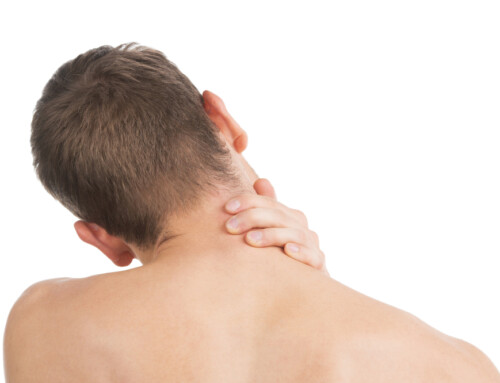
It is not thought that poor dental occlusion is the main cause of TMD. TMD is associated with stress, neck dysfunction, migraine, headaches, tinnitus and dizziness.
Physiotherapy and psychology can help to manage TMD.
Increased tension in the jaw muscles from stress and overuse increase the risk of developing TMD. Psychological stress contributes to increased jaw muscle activity as measured by electromyography (EMG). In a scoping review in 2026, pre-clinical and cross-sectional studies demonstrated that psychological stress increased jaw muscle EMG. In clinical studies, 25 of the 29 studies showed that stress increased jaw muscle tension. Patients with TMD also showed increased EMG activation in jaw muscles compared to healthy controls. ently evaluated when assessing patients with TMD. Manual therapy treatments aimed at reducing jaw muscle tension and relaxation and psychological interventions can help reduce stress and the resultant jaw muscle tension and pain.
Low level laser therapy (LLLT) has some evidence to support its use in reducing pain in TMJ muscles. It can also help to increase the amount of mouth opening in TMD patients post application.
Links to the Royal College of Surgeons and British Medical Association guidelines are shown below. They provide an excellent summary of the current evidence for the causes and best treatments for TMD. References for the jaw muscle EMG studies are also listed in the reference list below.
Royal College of Surgeons guidelines for TMD 2024.
https://www.rcseng.ac.uk/dental-faculties/fds/publications-guidelines/clinical-guidelines/
The dentist is usually the first person that a person with TMD will see, and they should teach self management techniques to alter clenching and posture, teach basic self manual therapy and advise on the use of heat to help relax the jaw muscles.
If this does not help, then physiotherapy and acupuncture are recommended. It may be that physiotherapy, acupuncture and psychological therapys may be needed to help maintain improvement in symptoms. This may be when flare ups happen, or periodically to help prevent flare ups.
Splints may help some sub-types of TMD but not all. The evidence for this is difficult to interpret as to which conditions benefit and which do not. For some people, splints can make their symptoms worse.
Medications can be considered for pain and muscle tension, but this may not be appropriate for all people. For more persistent muscular TMD issues, neuromodulatory medications can be considered.
Only if this does not work should surgery be considered for TMD.
BMJ GUIDELINES
https://www.bmj.com/content/383/bmj-2023-076227
Strongly recommends TMJ manual therapy and psychological therapy and also recommends acupuncture, neck manual therapy, and exercise. This should be provided before using and injections or surgery. It is likely that a number of interventions will be required to be effective.
These guidelines do not recommend medications, TENS, laser, or surgery as they are likely to be ineffective.
Nicholas Evans at e-physiotherapy has been treating Temporomandibular joint Disorders for over 20 years and is a member of the Association of Chartered Physiotherapists in Temporomandibular Disorders (ACPTMD). Nicholas Evans has related experience in dealing with voice issues which may also be a problem for people with TMJ disorders.
References
British Medial Journal TMJ Guidelines. https://www.bmj.com/content/383/bmj-2023-076227
https://www.bos.org.uk/wp-content/uploads/2022/09/Tmdsandtheothodonticpatient2020.pdf
https://cks.nice.org.uk/topics/temporomandibular-disorders-tmds/management/management/
da Silva Mira PC, Biagini ACSCF, Gomes MG, Galo R, Corona SAM, Borsatto MC. Laser acupuncture to reduce temporomandibular disorder (TMD) symptoms: systematic review and meta-analysis. Lasers Med Sci. 2024 Feb 20;39(1):66. doi: 10.1007/s10103-024-03999-z. PMID: 38374226.
Peixoto KO, Abrantes PS, De Carvalho IHG, De Almeida EO, Barbosa GAS. Temporomandibular disorders and the use of traditional and laser acupuncture: a systematic review. Cranio. 2023 Nov;41(6):501-507. doi: 10.1080/08869634.2021.1873605. Epub 2021 Jan 12. PMID: 33433268.
Weden, Alexander & Bateman, Phillip & Gordon, Cathy & Hodgson, Nicola & Durham, Justin. (2021). Physiotherapy for the Management of Temporomandibular Disorders: Findings from United Kingdom Practice. Oral Surgery. 15. 10.1111/ors.12712.
Weden A, Haig H. Current thinking in physiotherapy for the management of idiopathic and postsurgical temporomandibular disorders: a narrative review. Br J Oral Maxillofac Surg. 2024 Jul;62(6):588-593. doi: 10.1016/j.bjoms.2024.05.008. Epub 2024 Jun 4. PMID: 38906764.
Weden A, Koutris M, van der Meer H. The effect of psychological stress on masticatory muscle electromyography-a scoping review. J Oral Facial Pain Headache. 2026 Jul;40(4):9-18. doi: 10.22514/jofph.2026.047. Epub 2026 Jul 12. PMID: 42548100; PMCID: PMC13434148.
Royal College of Surgeons TMJ Guidelines. https://www.rcseng.ac.uk/dental-faculties/fds/publications-guidelines/clinical-guidelines/