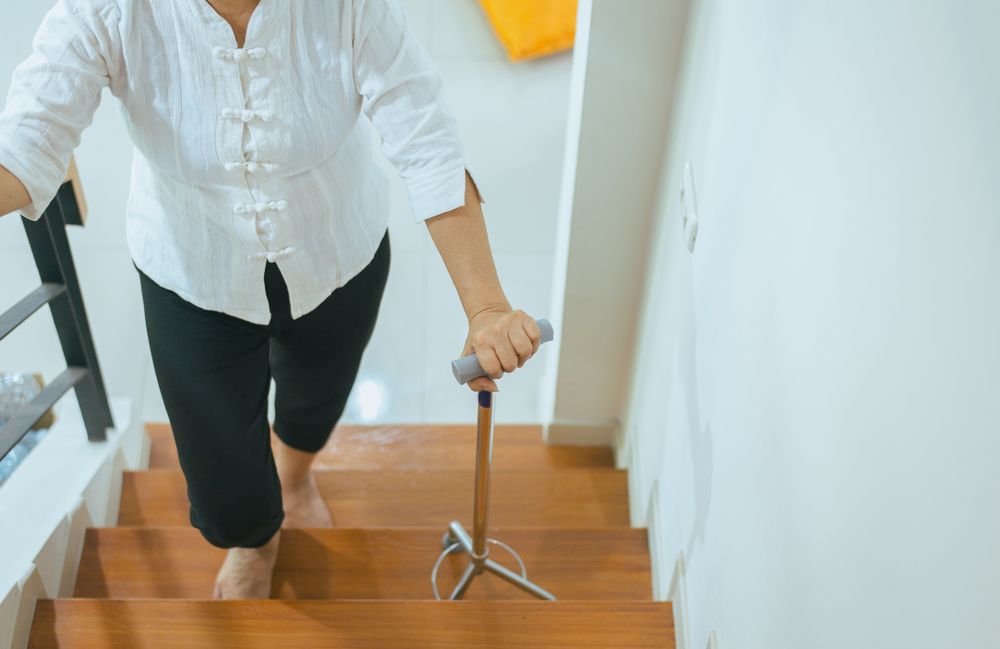

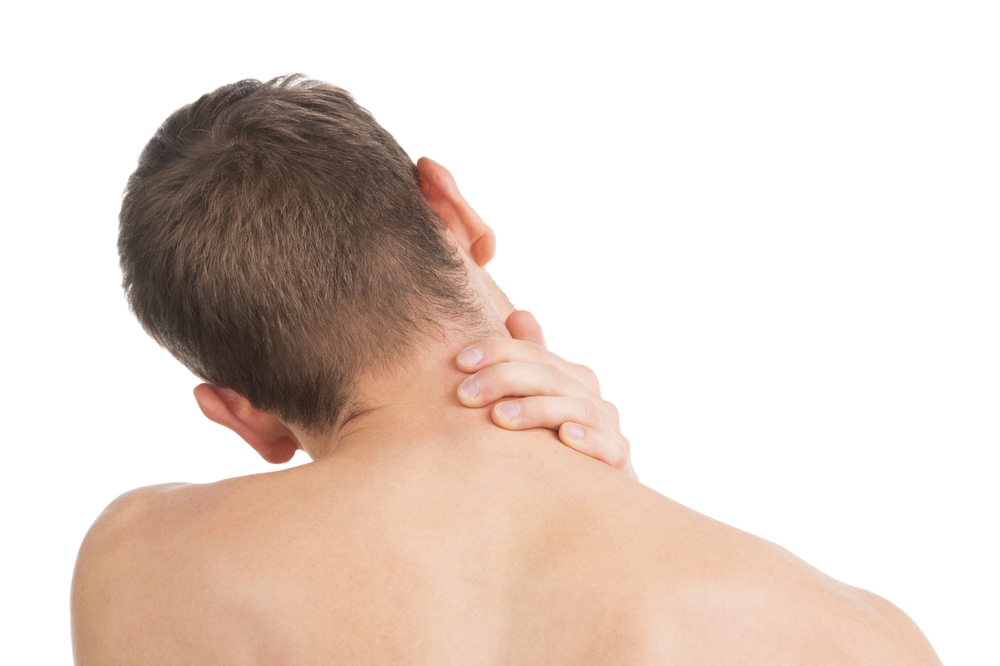
Stress can cause muscle tension and conditions related to muscle tension such as temporomandibular joint dysfunction (TMD), tension headaches and migraines, low back pain, neck and shoulder pain and dizziness. Stress creates muscle tension by activating your sympathetic nervous system and releasing adrenaline making you ready for a fight or flight response. In most cases, there is no need for this response and the tension remains in your muscles. Eventually, if you are chronically stressed, the fight or flight response doesn’t settle down and you may end up with trigger points in your muscles that are painful at rest. This constant tension in your muscles reduces blood flow to the muscle, perpetuating the trigger points by not allowing waste products of cell metabolism to be removed. This is irritating for the muscle and further increases its tone. Substances such as histamine, substance P, prostaglandins, and bradykinins remain in the muscle and creat inflammation and nerve sensitisation. This further increases the intensity of the pain experiencd.
Stress not only affects muscle tone and nerve sensitivity, it affects the whole body. The American Psychologiclal Association has a great article on how stress affects your whole body:
https://www.apa.org/topics/stress/body
The vagus nerve can become inhibited if you are chronically stressed. The vagus nerve is mostly parasympathetic, which is involved in promoting digestion, relaxation and sleep. In contrast to the sympathetic nervous system which is for fight or flight responses. If you are having problems with gastric reflux and sleep, you may have an overactive sympathetic nervous system and underactive parasympathetic nervous system.
What is stress?
Many activites that we do every day are stressful and this on its own is not a problem. Stress can help up focus to complete a task or to avoid injury. However if stress becomes persistent or repeated without periods if relaxation, it becomes a problem. Some things that are stressful can be quite routine and you might not be aware that you are stressed. For example, a lack of perceived control, a requirement for sustained focus or dealing with the public at work cam cause stress. Changing jobs, moving house, being a carer, having ill relatives, relationship issues, and children can be stressful. It is important to remember that some people will find the same situations stressful and others will not find them stressful. For instance, driving can be stressor or relaxing. Some people suffer from social anxiety and any interaction with people can be stressful, whereas other people find socializing relaxing and rejuvenating. We can all cope with some stress, but when you have to deal with multiple stressors, repeated stressors or extreme stress, you may start to deveop symptoms. People with attention deficit and hyperactivity disorder (ADHD) are less able to cope with stress. Their tendancy to be poor time managers, have poor focus and difficulty completing tasks also increases the stress they experience. If you have experienced more extreme stressful episodes, you may develop post traumatic stress disorder (PTSD) or complex trauma issues.
What evidence is there for stress causing musculoskeletal disorders and pain?
- Stress and TMJ/TMD. Patients with temporomandibular disorders breathe more quickly, report more anxiety, sadness and guilt than people without TMD problems. Curran et.al 1996.
- TMD patients do not have inceased EMG activation compared to controls but they do report that they feel more tension in their muslces. They also have increased sympathetic nervous system activation as measured by heart rate, systolic blood pressure and skin temperature. Carlson et.al 1993.
- Not sleeping enough and anxiety. Poor sleep is associated with a poorer mental state, including anxiety and depression. Higher anxiety levels can be measured through raised blood cortisol levels in people with poor sleep.
Treatment for stress and muscle tension symptoms.
What to do about it? How you relax is up to you. Being aware of when you are feeling stress and relaxing your muscles if possible. It may be more formal things like counselling, relaxation recordings, breathing exercises, cognitive behavioural therapy, motivational interviewing, mindfulness, yoga. Less formal things like exercise, dancing, a hot bath, massage, aromatherapy, reading, drawing or being creative, photography, watching TV or attending a show, cooking or baking, going for a walk in nature, or gardening may relax you.
If you need a professional’s help, the following things have been shown to provide some benefit:
- Physiotherapy, especially manual therapy for muscular tension, and joint stiffness can be very helpful to start to break the cycle or chronic stress. Strengthening, control ex, and breathing exercises can help to reduce pain, stiffness and stress. Physiotherapy has been shown to improve muscle pain, mouth opening, anxiety, stress and depression in patients who grind their teeth (bruxism). The quality of the research is poor however. Amorim et.al 2017.
- Massage can reduce stress as measured by cortisol and prolactin levels. Stringer et.al. 2008.
- Manual therapy including joint mobilisations, soft tissue techniques and acupuncture may help to reduce tension headache intensity and frequency, compared to no treatment, but the evidence is limited. Manual therapy and acupuncture have similar effects to prophylactic medication and tricyclic antidepressants. Kamonseki et.al 2020. Turkistani et.al 2021.
- Diaphragmatic breathing helps to reduce stress as measured by heart rate, respiratory rate, blood pressure and questionnaire based stress levels. Hopper et.al 2019. The reduced stress may help to reduce muscle tension and pain.
- Physical activity helps to reduce anxiety, cortisol levels and improve sleep. De Nys et.al 2022. This may lead to reduced muscle tension and pain.
- Relaxation, biofeedback and cognitive behavioural therapy may reduce tension headache intensity, frequency and medication use compared to no treatment. Blanchard et.al 1990.
- Physical self-regulation treatment strategies ( deep breathing, postural relaxation, muscle relaxation and mindfulness) are effective for the management of facial and TMD pain. Carlson et.al 2001.
- Heat can help to relax muscles.
- Stretching helps you to feel where you hold tension and to relax these areas.
- Mouth guards/appliances for TMD issues. There is little evidence for the effectiveness of mouth guards/appliances for reducing tension in TMJ muscles and TMJ pain. Truelove et.al 2006. However there are many types of appliances for TMD, meaning it is unclear if some work and some do not work.
- Acupuncture and dental appliances may help to reduce pain and increase mouth opening range in TMD patients. Grillo et.al 2015.
References:
Amorim CSM, Espirito Santo AS, Sommer M, Marques AP. Effect of Physical Therapy in Bruxism Treatment: A Systematic Review. J Manipulative Physiol Ther. 2018 Jun;41(5):389-404. doi: 10.1016/j.jmpt.2017.10.014. PMID: 30041736.
Blanchard EB, Appelbaum KA, Nicholson NL, Radnitz CL, Morrill B, Michultka D, Kirsch C, Hillhouse J, Dentinger MP. A controlled evaluation of the addition of cognitive therapy to a home-based biofeedback and relaxation treatment of vascular headache. Headache. 1990 May;30(6):371-6. doi: 10.1111/j.1526-4610.1990.hed3006371.x. PMID: 2196240.
Carlson CR, Bertrand PM, Ehrlich AD, Maxwell AW, Burton RG. Physical self-regulation training for the management of temporomandibular disorders. J Orofac Pain. 2001 Winter;15(1):47-55. PMID: 11889647.
Carlson CR, Okeson JP, Falace DA, Nitz AJ, Curran SL, Anderson D. Comparison of psychologic and physiologic functioning between patients with masticatory muscle pain and matched controls. J Orofac Pain. 1993 Winter;7(1):15-22. PMID: 8467294.
Curran SL, Carlson CR, Okeson JP. Emotional and physiologic responses to laboratory challenges: patients with temporomandibular disorders versus matched control subjects. J Orofac Pain. 1996 Spring;10(2):141-50. PMID: 9133858.
De Nys L, Anderson K, Ofosu EF, Ryde GC, Connelly J, Whittaker AC. The effects of physical activity on cortisol and sleep: A systematic review and meta-analysis. Psychoneuroendocrinology. 2022 Sep;143:105843. doi: 10.1016/j.psyneuen.2022.105843. Epub 2022 Jun 24. PMID: 35777076.
Grillo CM, Canales Gde L, Wada RS, Alves MC, Barbosa CM, Berzin F, de Sousa Mda L. Could Acupuncture Be Useful in the Treatment of Temporomandibular Dysfunction? J Acupunct Meridian Stud. 2015 Aug;8(4):192-9. doi: 10.1016/j.jams.2014.12.001. Epub 2014 Dec 8. PMID: 26276455.
Hopper SI, Murray SL, Ferrara LR, Singleton JK. Effectiveness of diaphragmatic breathing for reducing physiological and psychological stress in adults: a quantitative systematic review. JBI Database System Rev Implement Rep. 2019 Sep;17(9):1855-1876. doi: 10.11124/JBISRIR-2017-003848. PMID: 31436595.
Kamonseki DH, Lopes EP, van der Meer HA, Calixtre LB. Effectiveness of manual therapy in patients with tension-type headache. A systematic review and meta-analysis. Disabil Rehabil. 2022 May;44(10):1780-1789. doi: 10.1080/09638288.2020.1813817. Epub 2020 Sep 12. PMID: 32924640.
Lascar, Monica. Webinar, Stress Fatigue and Hormones, Getting the Balance Back, 2020 Apr 22.
Phelps AJ, Lethbridge R, Brennan S, Bryant RA, Burns P, Cooper JA, Forbes D, Gardiner J, Gee G, Jones K, Kenardy J, Kulkarni J, McDermott B, McFarlane AC, Newman L, Varker T, Worth C, Silove D. Australian guidelines for the prevention and treatment of posttraumatic stress disorder: Updates in the third edition. Aust N Z J Psychiatry. 2022 Mar;56(3):230-247. doi: 10.1177/00048674211041917. Epub 2021 Aug 27. PMID: 34448406.
Stringer J, Swindell R, Dennis M. Massage in patients undergoing intensive chemotherapy reduces serum cortisol and prolactin. Psychooncology. 2008 Oct;17(10):1024-31. doi: 10.1002/pon.1331. PMID: 18300336.
Truelove E, Huggins KH, Mancl L, Dworkin SF. The efficacy of traditional, low-cost and nonsplint therapies for temporomandibular disorder: a randomized controlled trial. J Am Dent Assoc. 2006 Aug;137(8):1099-107; quiz 1169. doi: 10.14219/jada.archive.2006.0348. PMID: 16873325.
Turkistani A, Shah A, Jose AM, Melo JP, Luenam K, Ananias P, Yaqub S, Mohammed L. Effectiveness of Manual Therapy and Acupuncture in Tension-Type Headache: A Systematic Review. Cureus. 2021 Aug 31;13(8):e17601. doi: 10.7759/cureus.17601. PMID: 34646653; PMCID: PMC8483450.