What types of Yoga Breathing are there and what are they good for?
The most gentle yoga breathing is Savasana (Corpse Pose). This is usually used at the end of a yoga class to create a relaxed state.
Pulse mediated relaxation breathing was devised more recently by Dr Vijay Pabbathi, from whom I have learned these techniques. This is also designed to create a relaxed state. It is also good for reducing your heart rate and blood pressure.
Bhastrika (Bellows Breath) is a more stimulating, breathing muscle activating and autonomic nervous system balancing technique.
Kapalabhati (Skull-shining breath) is one of the most vigorous yoga breathing exercise which increases alertness, stimulates the sympathetic nervous system and trains respiratory muscles.
How do yoga breathing exercises work and what are the physiological effects on the body?
Slow and relaxed exhalation activates the Parasympathetic Nervous System (PNS). The Vagus nerve provides the PNS innervation of your internal organs, including the lungs and heart. It slows your heart rate down, reduces blood pressure, increases blood flow to the lungs helping exchange oxygen efficeincy. This contrasts to what the Sympathetic Nervous System (SNS) does. The SNS is more involved in fight or flight responses in the body and many of us have too much stimulation of the SNS with everyday life and stress. This leads to higher blood pressure and resting heart rate, impaired immune system regulation, reduced sleep, fatigue, and increased pain perception.
We need a balance of the SNS an PNS to function normally. To be alert or respond to threats, we need the SNS. To relax, sleep, promote cellular repair and digest, we need the PNS.
If out of balance, too much SNS activation leads to a cycle of stress causing more SNS activation, continued poor sleep, fatigue and poor recovery, reduced ability to cope with pain and stress, and continued elevation of stress levels. Using slow exhalation intermittently through the day can help to break this cycle.
Breathing is how we get oxygen (O2) into our body and remove carbon dioxide (CO2). With poor oxygenation, less ATP is produced, which is the compound we require to release stored energy for movement and cognition. Poor breathing also leads to more CO2 in the blood, making it more acidic. There are also associations between poor oxygenation and neurodegeneration such as Alzheimer’s disease, Parkinson’s disease and vascular dementia.
Heart rate and blood pressure are reduced with breathing techniques that involve slow exhalation.
The Stress hormones adrenaline and cortisol are released when we are stressed due to the SNS being activated to be ready for the fight or flight response. By using relaxation and slow exhalation breathing exercises, the SNS response can be muted and the PNS activation increased. This then reduces the release of stress hormones.
The link between pain and stress/anxiety/depression is well established. Our tolerance to pain is reduced with stress, anxiety and depression. Pain levels can be reduced by around 2/10 on a pain scale by using techniques that relax us. This can be breathing exercises with long exhale phases, thinking of relaxing imagery, muscle hold relax exercises, or simply doing an activity that you like.
The more vigorous yoga breathing exercises like Bhastrika and Kapalabhati can help to improve your lung function. The main measure of this is the Forced Expiratory Volume in one second (FEV1). By practicing these breathing techniques, the diaphragm, intercostal muscles and accesory muscle of breathing become more efficient at moving air in and out of your lungs. Much like how you can strengthen larger muscles of the body, breathing muscles can be trained for both improved endurance and shorter more vigorous activation. This can lead to improved FEV1 lung function tests. This has been measured in a number of studies in the references list below.
Memory, attention and cognitive function can be improved short term and long term by using the more vigorous yoga breathing techniques (Bhastrika and Kapalabhati). The brain uses about 20% of your daily energy and it needs ATP to function. Without enough oxygen, the production of ATP is very inefficient (about 16 times less efficient than with oxygen) and your cognition will be imparied. So for good concentration and cognition, breathing efficiently and yoga breathing exercises are beneficial.
Diabetes can be helped with breathing exercises, in conjunction with medical management. Diabetes leads to poorly controlled blood sugar levels which in turn causes oxidative stress, vascular inflammation, nerve damage, elevated SNS activation and fatigue due to reduced energy being available from ATP. Reduced energy and fatigue makes exercise less likely which can further exacerbate high blood sugar levels and the resultant physiological effects outlined above. Yoga breathing exercises can improve vagal nerve (PNS) activation, reducing the chronic SNS activation, leading to improved sleep and repair ability. With the resultant increased energy levels and reduced fatigue, increased exercise is more likely, which can help to control blood sugar levels.
For most people, the slow exhalation yoga breathing techniques are the ones to use to reduce stress and SNS activation, improve sleep and energy levels. If you need a quick burst of alertness, the faster forced breathing techniques are what you need. This increases SNS activation, oxygen and energy levels to provide improved concentration and attention for short periods.
Contraindications/Precautions for heavier/faster breathing exercises:
Please do not try Kapalabhati (Skull Shining Breath) or Bhastrika (Bellows Breath) if you have uncontrolled hypertension (high blood pressure), cardiovascular disease, recent cardiovascular accident (CVA/stroke), epilepsy, glaucoma and retinal eye disorders, recent abdominal or thoracic surgery, abdominal hernia, during respiratory infections, or if you are pregnant.
Savasana (Corpse Pose) Relaxation Breathing
In a quiet location, lie on your back with your legs and arms a comfortable distance apart, palms facing upwards. Close your eyes and relax your face. Simply focus on your current breathing. Slowly scan through your body for any tension and let it relax. Let your mind become still and observe your breathing.
Pulse Mediated Relaxation Breathing
Sit comfortably and supported or lie on your back in a quiet location. Drink some water. Find your pulse at your wrist and focus on your pulse without counting it. Take a deep breath in through your nose and exhale slowly, Repeat this up to five times, then return to your normal breathing. Continue feeling your pulse and noticing your breathing throughout this exercise for 5 or more minutes.
Bhastrika (Bellows Breath) Breathing
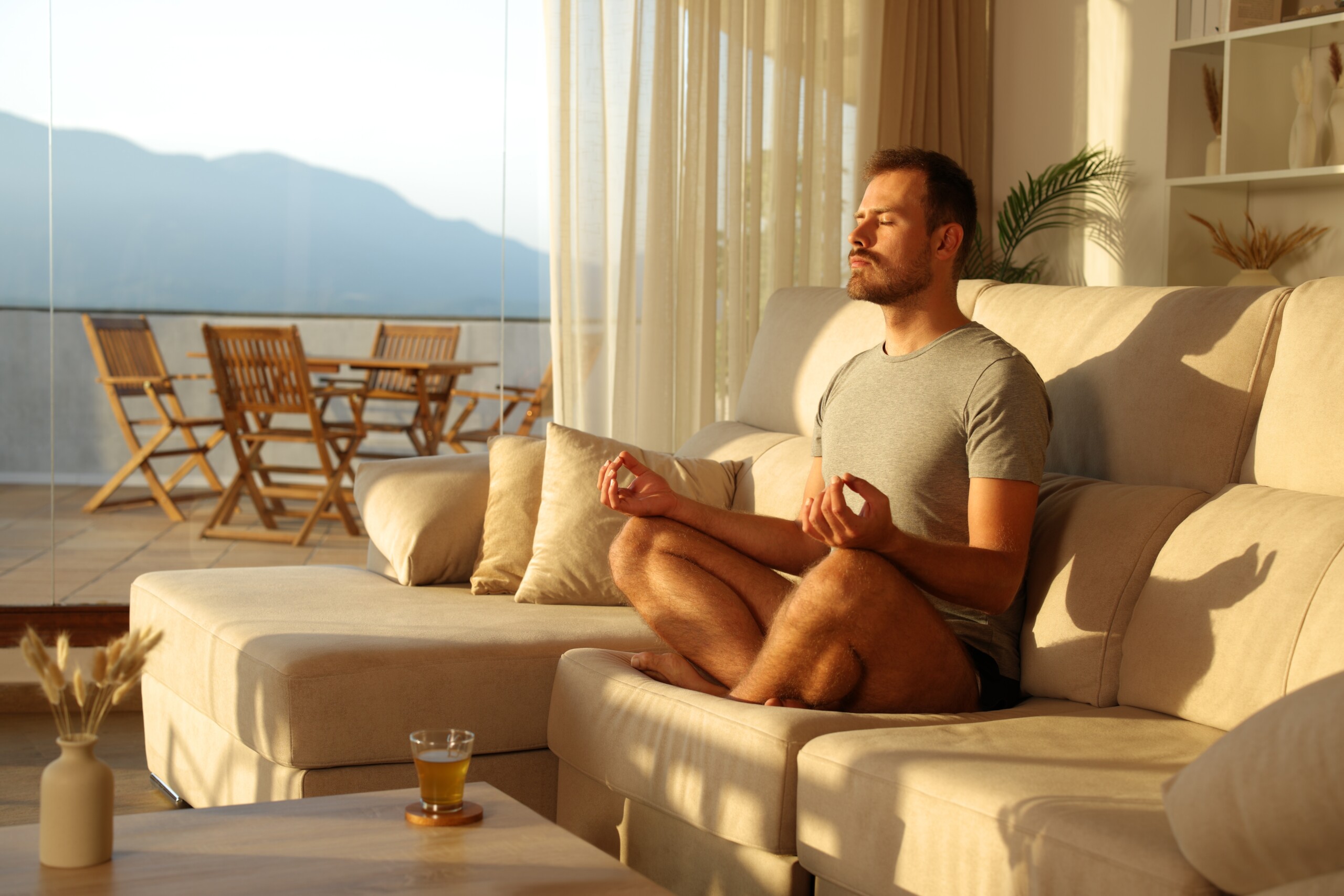
Sit cross legged on the floor or comfortably in a chair with your feet on the floor. Relax your shoulders and rest your hands palm up on your thighs. Inhale quickly and forcefully through the nose and immediately exhale forecefully through the nose by contracing your abdominal muscles. Try to breathe in and out every second and repeat for ten to twenty breaths then return to your natural breathing pattern. Continue normal breathing for thrity to sixty seconds, observing any sensations in your body. Repeat this pattern two to three times. Then sit quietly for a few minutes.
Kapalabhati (Skull-Shining Breath) Breathing
This is best done on an empty stomach. Sit cross legged on the floor or in a chair with your feet on the floor. Sit uptight but relax the shouders and face. Hands resting palm up on your thighs. Take a deep breath in through your nose and then forecefully and quickly breath out through the nose by forcefully contracting your abdominal muscles once every second. Don’t take a deep breath back in but allow some air to enter your lungs passively after each exhalation. Continue this for at least twenty breaths. Try to keep your neck, jaw and face relaxed, don’t move the shouders excessively. Return to your normal breathing and rest for sixty seconds. Observe any body sensations. Repeat the cycle two to three times.
References:
Budhi RB, Payghan S, Deepeshwar S. Changes in Lung Function Measures Following Bhastrika Pranayama (Bellows Breath) and Running in Healthy Individuals. Int J Yoga. 2019 Sep-Dec;12(3):233-239. doi: 10.4103/ijoy.IJOY_43_18. PMID: 31543632; PMCID: PMC6746052.
Budhi RB, Singh D. The Influence of Kapalabhati on Working Memory and Phasic Heart Rate Variability. Cureus. 2024 May 24;16(5):e61027. doi: 10.7759/cureus.61027. PMID: 38915978; PMCID: PMC11194464.
Budhi RB, Singh D, Goswami J, Manjunath NK, Vinchurkar S. Influence of High-frequency Yoga Breathing (Kapalabhati) on States Changes in Gamma Oscillation. Int J Yoga. 2024 May-Aug;17(2):106-115. doi: 10.4103/ijoy.ijoy_5_24. Epub 2024 Sep 13. PMID: 39444665; PMCID: PMC11495304.
Jafari H, Courtois I, Van den Bergh O, Vlaeyen JWS, Van Diest I. Pain and respiration: a systematic review. Pain. 2017 Jun;158(6):995-1006. doi: 10.1097/j.pain.0000000000000865. PMID: 28240995.
Jenkins AR, Gowler H, Curtis F, Holden NS, Bridle C, Jones AW. Efficacy of supervised maintenance exercise following pulmonary rehabilitation on health care use: a systematic review and meta-analysis. Int J Chron Obstruct Pulmon Dis. 2018 Jan 10;13:257-273. doi: 10.2147/COPD.S150650. PMID: 29391784; PMCID: PMC5768431.
Jerath R, Edry JW, Barnes VA, Jerath V. Physiology of long pranayamic breathing: neural respiratory elements may provide a mechanism that explains how slow deep breathing shifts the autonomic nervous system. Med Hypotheses. 2006;67(3):566-71. doi: 10.1016/j.mehy.2006.02.042. Epub 2006 Apr 18. PMID: 16624497.
Jiang X, Sun W, Chen Q, Xu Q, Chen G, Bi H. Effects of breathing exercises on chronic low back pain: A systematic review and meta-analysis of randomized controlled trials. J Back Musculoskelet Rehabil. 2024;37(1):13-23. doi: 10.3233/BMR-230054. PMID: 37718775.
Joseph AE, Moman RN, Barman RA, Kleppel DJ, Eberhart ND, Gerberi DJ, Murad MH, Hooten WM. Effects of Slow Deep Breathing on Acute Clinical Pain in Adults: A Systematic Review and Meta-Analysis of Randomized Controlled Trials. J Evid Based Integr Med. 2022 Jan-Dec;27:2515690X221078006. doi: 10.1177/2515690X221078006. PMID: 35225720; PMCID: PMC8891889.
McCarthy B, Casey D, Devane D, Murphy K, Murphy E, Lacasse Y. Pulmonary rehabilitation for chronic obstructive pulmonary disease. Cochrane Database Syst Rev. 2015 Feb 23;2015(2):CD003793. doi: 10.1002/14651858.CD003793.pub3. PMID: 25705944; PMCID: PMC10008021.
Malhotra V, Javed D, Pathak T. Effect of Bhastrika Pranayama on neuro- cardiovascular-respiratory function among yoga practitioners. Bioinformation. 2024 Nov 30;20(11):1549-1554. doi: 10.6026/9732063002001549. PMID: 40162461; PMCID: PMC11953524.
Novaes MM, Palhano-Fontes F, Onias H, Andrade KC, Lobão-Soares B, Arruda-Sanchez T, Kozasa EH, Santaella DF, de Araujo DB. Effects of Yoga Respiratory Practice (Bhastrika pranayama) on Anxiety, Affect, and Brain Functional Connectivity and Activity: A Randomized Controlled Trial. Front Psychiatry. 2020 May 21;11:467. doi: 10.3389/fpsyt.2020.00467. PMID: 32528330; PMCID: PMC7253694.
Pabbathi, Vijay. Integrating Therapeutic Yoga into Treatment Pathways. Course, 27-28/06/2026. University of Health Sciences. Bournemouth, UK.
Pramanik T, Sharma HO, Mishra S, Mishra A, Prajapati R, Singh S. Immediate effect of slow pace bhastrika pranayama on blood pressure and heart rate. J Altern Complement Med. 2009 Mar;15(3):293-5. doi: 10.1089/acm.2008.0440. PMID: 19249921.
Russo MA, Santarelli DM, O’Rourke D. The physiological effects of slow breathing in the healthy human. Breathe (Sheff). 2017 Dec;13(4):298-309. doi: 10.1183/20734735.009817. PMID: 29209423; PMCID: PMC5709795.
Shao, R., Man, I.S.C. & Lee, T.M.C. The Effect of Slow-Paced Breathing on Cardiovascular and Emotion Functions: A Meta-Analysis and Systematic Review. Mindfulness 15, 1–18 (2024). https://doi.org/10.1007/s12671-023-02294-2
Sharma VK, M R, S V, Subramanian SK, Bhavanani AB, Madanmohan, Sahai A, Thangavel D. Effect of fast and slow pranayama practice on cognitive functions in healthy volunteers. J Clin Diagn Res. 2014 Jan;8(1):10-3. doi: 10.7860/JCDR/2014/7256.3668. Epub 2013 Nov 18. PMID: 24596711; PMCID: PMC3939514.
Stancák A Jr, Kuna M, Srinivasan, Dostálek C, Vishnudevananda S. Kapalabhati–yogic cleansing exercise. II. EEG topography analysis. Homeost Health Dis. 1991;33(4):182-9. PMID: 1818698.
Telles S, Raghuraj P, Arankalle D, Naveen KV. Immediate effect of high-frequency yoga breathing on attention. Indian J Med Sci. 2008 Jan;62(1):20-2. PMID: 18239268.
Van Wesemael S, Janssens L, Amerijckx C, Goossens N, Klaps S, Vlemincx E, Bogaerts K. Breathing interventions for spinal pain: A systematic review and meta-analysis. Clin Rehabil. 2025 Dec;39(12):1547-1561. doi: 10.1177/02692155251382790. Epub 2025 Oct 16. PMID: 41099211.
Zaccaro A, Piarulli A, Laurino M, Garbella E, Menicucci D, Neri B, Gemignani A. How Breath-Control Can Change Your Life: A Systematic Review on Psycho-Physiological Correlates of Slow Breathing. Front Hum Neurosci. 2018 Sep 7;12:353. doi: 10.3389/fnhum.2018.00353. PMID: 30245619; PMCID: PMC6137615.
Zhai H, Zhang L, Xia J, Li C. The Efficiency of Respiratory Exercises in Rehabilitation of Low Back Pain: A Systematic Review and Meta-Analysis. J Sport Rehabil. 2024 Feb 20;33(3):189-200. doi: 10.1123/jsr.2023-0207. PMID: 38377983.