Shoulder injuries in the gym: common causes and rotator cuff exercises
 Nicholas Evans29 October 2026 · 7 min read
What are the Most Common Reasons for Injuring your Shoulder in the Gym?
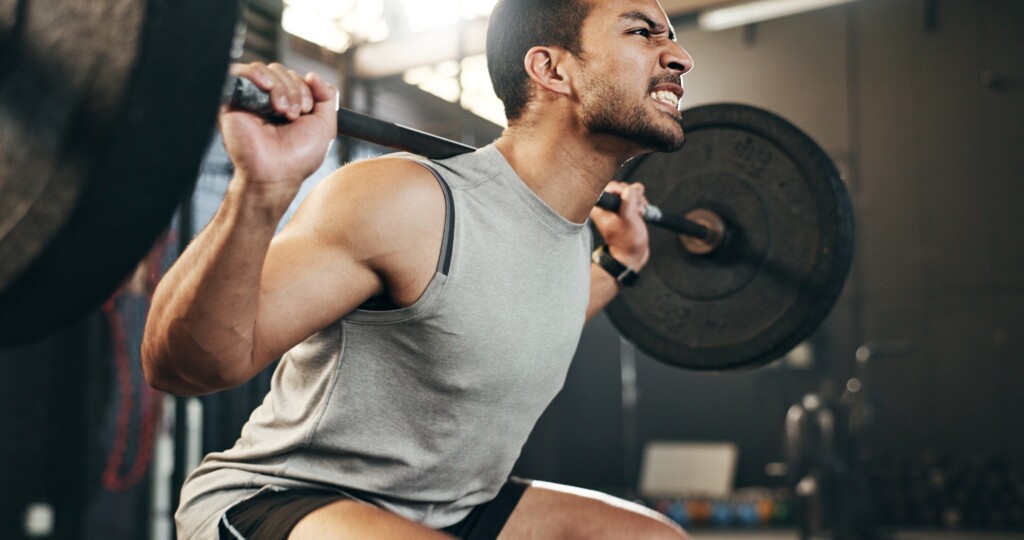
The most obvious reason is lifting weights beyond your ability. Your muscle, tendon and ligament tissue needs to adapt to increased loads. This takes time and adequate rest to avoid injury. Try to feel the load in the muscles for the strengthening exercise you are doing. If the weight is too heavy, you will often feel the load in the joint or tendons rather than the muscles. You may also feel it in the incorrect muscles as they are trying to assist with lifting the heavy weight. It is important to remember that even with bad form, if you load very gradually you might not get pain or injuries. Our bodies can adapt to loads if it is done slowly enough with enough rest days. There is very little correlation between posture, form and gym injury rates. If you do not have strength imbalances in the scapula or humerus, you may not get shoulder pain.
As I mentioned above, not having enough rest days between training the same muscle groups can lead to injury. This most commonly causes tendinopathy (tendinitis). For some people, two full days are required between strength training sessions on the same muscle groups. Tendons must adapt to the increased load with weight training. Initially, tendon fibres are removed before being remodelled and placed in areas of increased load. If this process is not finished, the tendon tissue can have small holes in it rather than stronger tendon tissue. This can become painful and if continued longer term, can lead to tendon ruptures.
When training the upper body, scapula (shoulder blade) and rotator cuff control are essential. The upper trapezius, serratus anterior and lower trapezius coordinate the scapula movement with elevating the arm. Without adequate strength and control, tendons can become inflamed and painful, and muscles can have localised spasms (trigger points). It is important not to just strengthen the lower trapezius as some therapist and trainers believe. Upper trapezius, serratus anterior and lower trapezius need to all be working well together to avoid shoulder injuries. The control of the humerus position within the glenohumeral joint (shoulder joint) is also essential to avoid injuries in the gym. This is the job of the rotator cuff of the shoulder.
When the scapula control muscles are not coordinated or strong enough, the scapula may tilt forwards to cope with the load. This is likely to cause shoulder pain, tendinopathy and rotator cuff injuries. This control is especially important when doing shoulder press, bench press, dumbbell chest press, pull ups, and most biceps and triceps exercises.
Along with the scapula tilting forwards, the shoulder joint often internally rotates with pushing movements such as bench press, dumbbell chest press and shoulder press. This can be easily seen as your elbows will move outwards rather than your forearm staying in a more vertical position. The shoulder should be kept in this more neutral position to help avoid injuries. This internal rotation often happens if you have rotator cuff weakness or control issues. Wide grip bench press or wide dumbbell chest press increases the likelihood of shoulder internal rotation, abduction and pain. A narrower grip can help, but you may need to reduce the weight with this grip. If you are doing bench press with a barbell, using dumbbells instead of a bar can help as you can have your shoulders in less abduction and it can help you externally rotate your shoulder. If you are just starting in the gym, it is best to start with dumbbell chest press rather than bench press with a barbell.
If you do a lot of deltoid strengthening with shoulder press or raise, and you do not do rotator cuff strengthening, pain can develop from the deltoid pulling the humerus superiorly (upwards).
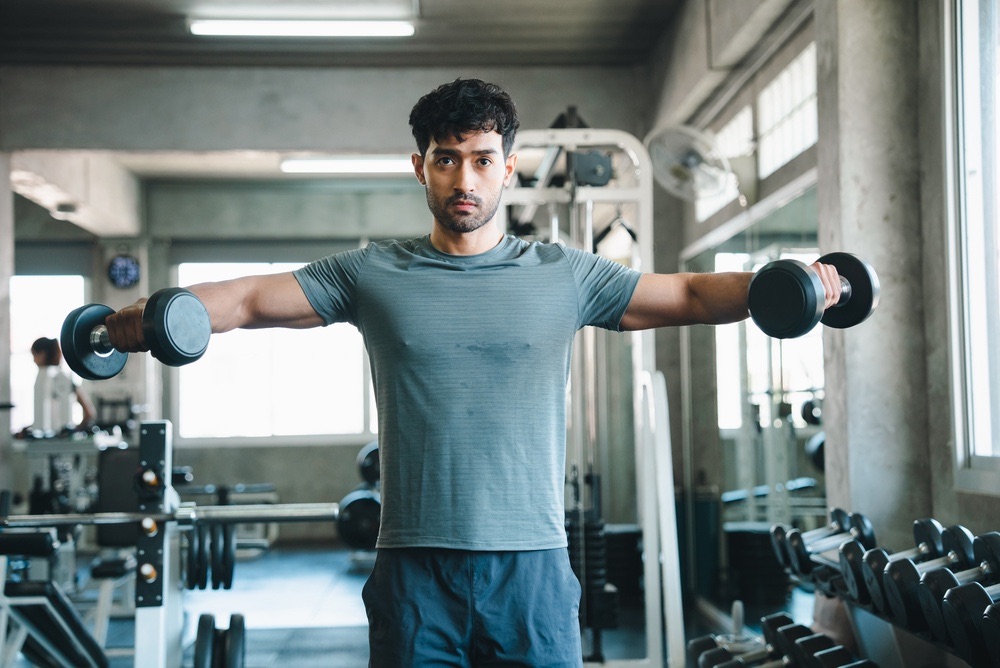
Doing deltoid strengthening exercises in the plane of the scapula (halfway between in front and to the side of your body) can help to strengthen the rotator cuff and deltoid together and prevent pain. Using a kettle bell upside down to do a shoulder press in front of you (bottom-up kettle bell press), can also help to strengthen the rotator cuff with the deltoid. Using machines only for deltoid strengthening may lead to your deltoids getting bigger but your rotator cuff strength not keeping up to stabilise the humeral head, leading to pain. Cables and free weights are better options that using machines alone.
If you do not have rotator cuff strengthening exercises in your gym routine, you may be at more risk of injury. There are many option to strengthen your rotator cuff. Your personal trainer or a physiotherapist can guide you on what exercises will be best for you.
What rotator cuff exercises work the best for strengthening the rotator cuff?
Physiotherapy strength training for shoulder pain has been shown to lead to a statistically significant improvement in shoulder pain levels, functional ability and disability compared to no intervention. There is not enough evidence for specific eccentric training versus concentric/eccentric training for improving shoulder pain and function, but it does help improve strength. Rehabilitative strength training exercises targeted at changing upper body posture and scapula anterior tilt have been shown to be significantly more effective than rotator cuff strengthening exercises alone for improving pain, strength and function.
Some specific shoulder strengthening programmes, such as the Lynne Watson’s programme, have been shown to be statistically significantly better than other programmes, but the low number of participants in these studies makes it hard to extend to all shoulder injuries. Other scapula strengthening programmes have also shown statistically significant reductions in pain, and disability and increases in strength, so there is not one programme that is necessarily better than others.
Adding stepping forwards or stepping up to a shoulder strengthening programme has evidence regarding its effectiveness for activating the scapula control muscles, but there is some conflicting research to suggest that it does not increase muscle activation in the scapula muscles compared to not stepping forwards or up.
Ultrasound therapy with a physiotherapist, can be helpful in reducing pain in the shoulder so rehabilitative strengthening can be used for long term improvement without pain. This is especially with tendinopathy and calcific tendinitis. Extra corporeal shock wave therapy is also helpful if you have had tendinopathy for a longer period.
If you have had injuries in the gym, it is best to be assessed by a physiotherapist. Nicholas Evans at e-physiotherapy has many years’ experience with gym strength training and treating shoulder injuries. He regularly discusses clients with personal trainers to help them reduce injuries in the gym. He has training in many different types of rehabilitation for shoulder injuries, as one programme may not be the best option for all people with gym related shoulder injuries.
References:
Cardoso de Souza M, Trajano Jorge R, Jones A, Lombardi Júnior I, Natour J. Progressive resistance training in patients with shoulder impingement syndrome: literature review. Reumatismo. 2009 Apr-Jun;61(2):84-9. doi: 10.4081/reumatismo.2009.84. PMID: 19633794.
Cho MS, Kim MK, Shin MS, Seo YG, Moon HH, Park YJ, Min KB, Park JM, Lee SM. Changes in shoulder function and muscle strength following rehabilitation exercise program in male patients with forward shoulder posture undergoing rotator cuff repair. BMC Musculoskelet Disord. 2024 Oct 2;25(1):776. doi: 10.1186/s12891-024-07905-0. PMID: 39358776; PMCID: PMC11448409.
Čota S, Delimar V, Žagar I, Kovač Durmiš K, Kristić Cvitanović N, Žura N, Perić P, Laktašić Žerjavić N. Efficacy of therapeutic ultrasound in the treatment of chronic calcific shoulder tendinitis: a randomized trial. Eur J Phys Rehabil Med. 2023 Feb;59(1):75-84. doi: 10.23736/S1973-9087.22.07715-2. Epub 2023 Feb 1. PMID: 36723056; PMCID: PMC10035437.
Lombardi I Jr, Magri AG, Fleury AM, Da Silva AC, Natour J. Progressive resistance training in patients with shoulder impingement syndrome: a randomized controlled trial. Arthritis Rheum 2008; 59: 615-22.
Maenhout AG, Mahieu NN, De Muynck M, De Wilde LF, Cools AM. Does adding heavy load eccentric training to rehabilitation of patients with unilateral subacromial impingement result in better outcome? A randomized, clinical trial. Knee Surg Sports Traumatol Arthrosc. 2013 May;21(5):1158-67. doi: 10.1007/s00167-012-2012-8. Epub 2012 May 12. PMID: 22581193.
Philadelphia Panel Evidence-Based Clinical Practice Guidelines on Selected Rehabilitation Interventions: Overview and Methodology. Physical Therapy (Vol 81, no 10, pp. 1629-1649.
Richardson E, Lewis JS, Gibson J, Morgan C, Halaki M, Ginn K, Yeowell G. Role of the kinetic chain in shoulder rehabilitation: does incorporating the trunk and lower limb into shoulder exercise regimes influence shoulder muscle recruitment patterns? Systematic review of electromyography studies. BMJ Open Sport Exerc Med. 2020 Apr 22;6(1):e000683. doi: 10.1136/bmjsem-2019-000683. PMID: 32405430; PMCID: PMC7202723.
Valier AR, Averett RS, Anderson BE, Welch Bacon CE. The Impact of Adding an Eccentric Exercise Component to the Rehabilitation Program of Patients With Shoulder Impingement: A Critically Appraised Topic. J Sport Rehabil. 2016 May;25(2):195-201. doi: 10.1123/jsr.2014-0230. Epub 2014 Oct 30. PMID: 25364914.
Warby SA, Ford JJ, Hahne AJ, Watson L, Balster S, Lenssen R, Pizzari T. Comparison of 2 Exercise Rehabilitation Programs for Multidirectional Instability of the Glenohumeral Joint: A Randomized Controlled Trial. Am J Sports Med. 2018 Jan;46(1):87-97. doi: 10.1177/0363546517734508. Epub 2017 Oct 19. PMID: 29048942.
Yuksel E, Yesilyaprak SS. Scapular stabilization exercise training improves treatment effectiveness on shoulder pain, scapular dyskinesis, muscle strength, and function in patients with subacromial pain syndrome: A randomized controlled trial. J Bodyw Mov Ther. 2024 Jan;37:101-108. doi: 10.1016/j.jbmt.2023.11.005. Epub 2023 Nov 23. PMID: 38432789.
Want Nicholas to take a look?