Postpartum Low Back Pain: Physiotherapy Guidelines for Getting Back to Exercise
 Nicholas Evans23 November 2026 · 2 min read
How do you get back to exercise and reduce pain after giving birth?
Canadian guidelines on dealing with post-partum low back pain and pelvic girdle pain are the most recent and comprehensive current guidelines. This helps guide health professionals in the most effective treatments and exercise strategies for postpartum women but can also be read by new mothers to help decide which advice and interventions might be best for them.
The full guidelines are available here:
https://bjsm.bmj.com/content/59/8/515
The “Get Active Questionnaire for Postpartum” issued by the Canadian Society for Exercise Physiology, also helps new mothers to decide if they need the professional help of a physiotherapist or exercise specialist to reduce pain, return to activity, exercise and sport after childbirth. This questionnaire outlines possible reasons why you might not be ready for exercise, and if you need advice.
It is important to note that a divided rectus abdominis muscle postpartum is not a reason to avoid exercise.
The questionnaire is available on this website:
https://csep.ca/2025/03/21/csep-get-active-questionnaire-for-postpartum/
There are many barriers to getting back to activity and exercise. Having a young child means the time available for exercise can be extremely limited. Sleep deprivation and a lack of energy may mean you prefer to sleep than exercise, when there is time. If you have pain, this may put you off exercising for fear of making the pain worse. 43% of postpartum women have pain at two weeks, and 25% at three months.
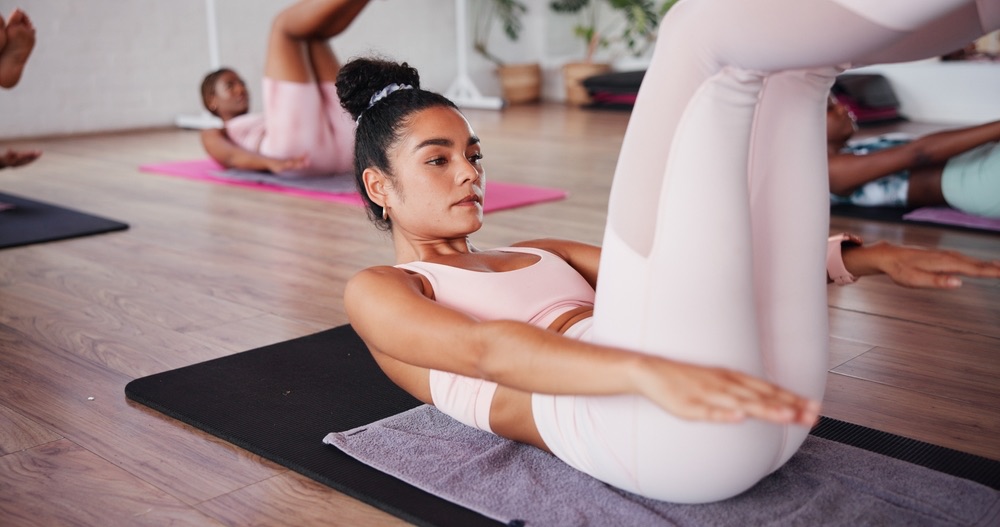
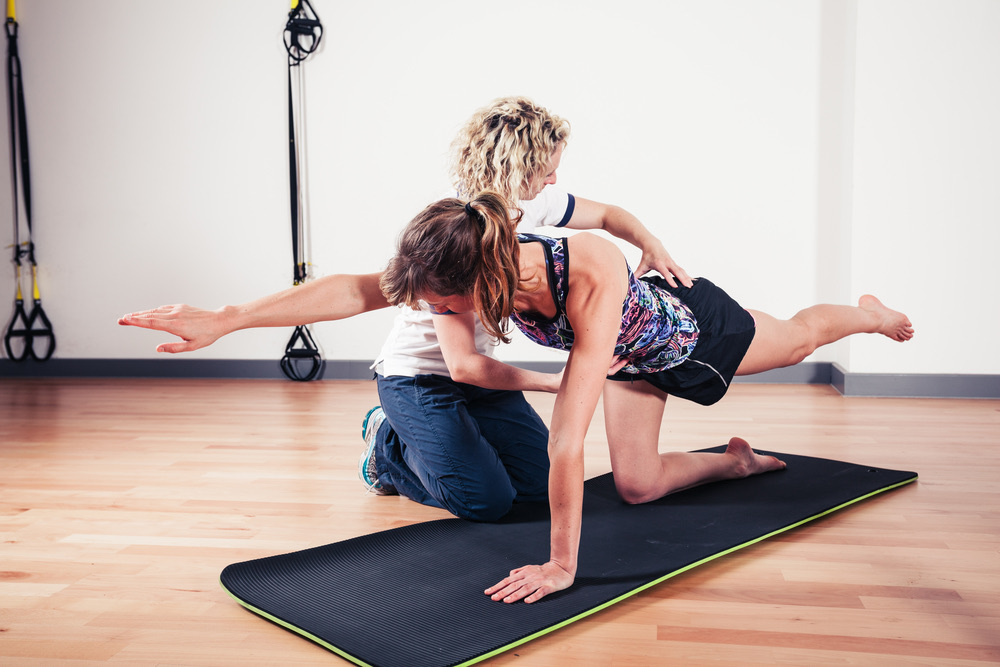
Overall results are best if exercise is commenced by 12 weeks postpartum. This may mean only a few minutes a day initially. Exercises which can be done with your baby are best initially. Pelvic floor exercises, yoga and Pilates floor exercises, upper body resistance band exercises, body weight exercises like squats, and abdominal strengthening can be done with minimal equipment and for minutes at a time. Aim to build up gradually to 30 minutes a day 4 days a week, as time and energy levels permit.
If you need help returning to exercise, Nicholas Evans at e-physiotherapy has experience in yoga, Pilates, body weight exercises and resistance band exercises to get you started.
References:
Beamish, Nicole. Not just sets and reps: Exercise and clinical decision making for post-partum pelvic girdle pain. Presentation at 12th Interdisciplinary World Congress on Low Back Pain and Pelvic Girdle Pain. 2-5/11/2026. Porto, Portugal.
Davenport MH, Ruchat SM, Jaramillo Garcia A, Ali MU, Forte M, Beamish N, Fleming K, Adamo KB, Brunet-Pagé É, Chari R, Lane KN, Mottola MF, Neil-Sztramko SE. 2025 Canadian guideline for physical activity, sedentary behaviour and sleep throughout the first year post partum. Br J Sports Med. 2025 Mar 25:bjsports-2025-109785. doi: 10.1136/bjsports-2025-109785. Epub ahead of print. PMID: 40139673.
Munro A, George RB, Chorney J, Snelgrove-Clarke E, Rosen NO. Prevalence and Predictors of Chronic Pain in Pregnancy and Postpartum. J Obstet Gynaecol Can. 2017 Sep;39(9):734-741. doi: 10.1016/j.jogc.2017.01.026. Epub 2017 Jun 16. PMID: 28624445.
Related conditions we treat
Want Nicholas to take a look?